


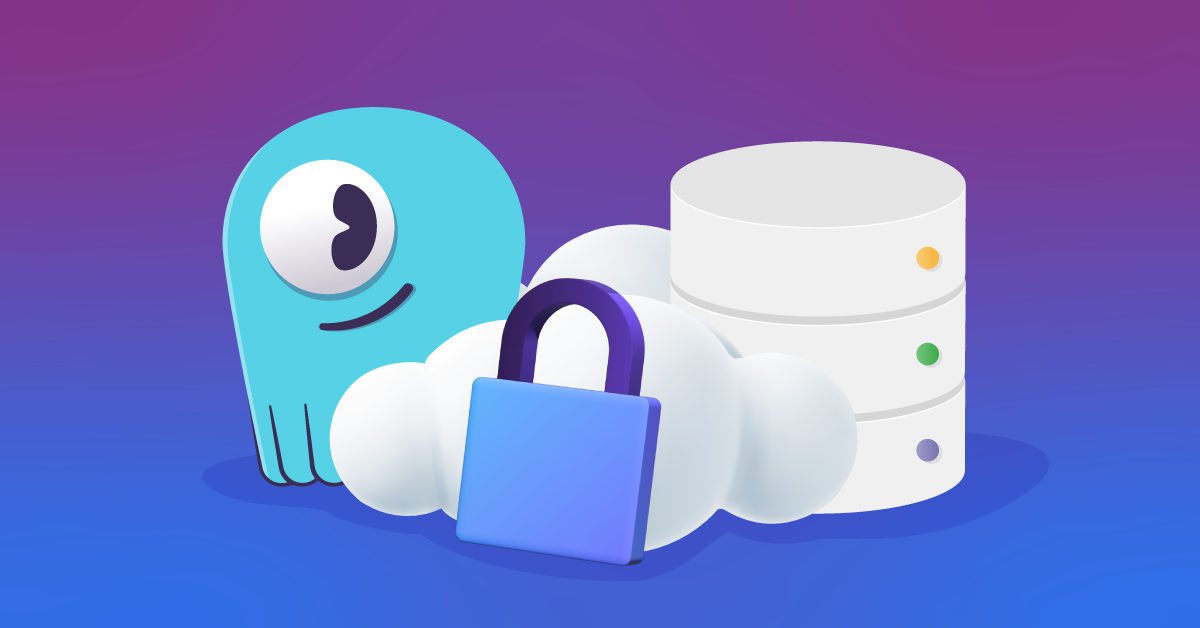
Learn about ScyllaDB database-level encryption with Customer-Managed Keys & see how to set up and manage encryption with a customer key — or delegate encryption to ScyllaDB
ScyllaDB Cloud takes a proactive approach to ensuring the security of sensitive data: we provide database-level encryption in addition to the default storage-level encryption. With this added layer of protection, customer data is always protected against attacks. Customers can focus on their core operations, knowing that their critical business and customer assets are well-protected.
Our clients can either use a customer-managed key (CMK, our version of BYOK) or let ScyllaDB Cloud manage the CMK for them.
The feature is available in all cloud platforms supported by ScyllaDB Cloud.
This article explains how ScyllaDB Cloud protects customer data. It focuses on the technical aspects of ScyllaDB database-level encryption with Customer-Managed Keys (CMK).
Storage-level encryption
Encryption at rest is when data files are encrypted before being written to persistent storage. ScyllaDB Cloud always uses encrypted volumes to prevent data breaches caused by physical access to disks.
Database-level encryption
Database-level encryption is a technique for encrypting all data before it is stored in the database. The ScyllaDB Cloud feature is based on the proven ScyllaDB Enterprise database-level encryption at rest, extended with the Customer Managed Keys (CMK) encryption control. This ensures that the data is securely stored – and the customer is the one holding the key. The keys are stored and protected separately from the database, substantially increasing security.
ScyllaDB Cloud provides full database-level encryption using the Customer Managed Keys (CMK) concept. It is based on envelope encryption to encrypt the data and decrypt only when the data is needed. This is essential to protect the customer data at rest.
Some industries, like healthcare or finance, have strict data security regulations. Encrypting all data helps businesses comply with these requirements, avoiding the need to prove that all tables holding sensitive personal data are covered by encryption.
It also helps businesses protect their corporate data, which can be even more valuable.
A key feature of CMK is that the customer has complete control of the encryption keys. Data encryption keys will be introduced later (it is confusing to cover them at the beginning).
The customer can:
- Revoke data access at any time
- Restore data access at any time
- Manage the master keys needed for decryption
- Log all access attempts to keys and data
Customers can delegate all key management operations to the ScyllaDB Cloud support team if they prefer this.
To achieve this, the customer can choose the ScyllaDB key when creating the cluster.
To ensure customer data is secure and adheres to all privacy regulations. By default, encryption uses the symmetrical algorithm AES-128, a solid corporate encryption standard covering all practical applications. Breaking AES-128 can take an immense amount of time, approximately trillions of years.
The strength can be increased to AES-256.
Note: Database-level encryption in ScyllaDB Cloud is available for all clusters deployed in Amazon Web Services (AWS) and Google Cloud Platform (GCP).
Encryption
To ensure all user data is protected, ScyllaDB will encrypt:
- All user tables
- Commit logs
- Batch logs
- Hinted handoff data
This ensures all customer data is properly encrypted.
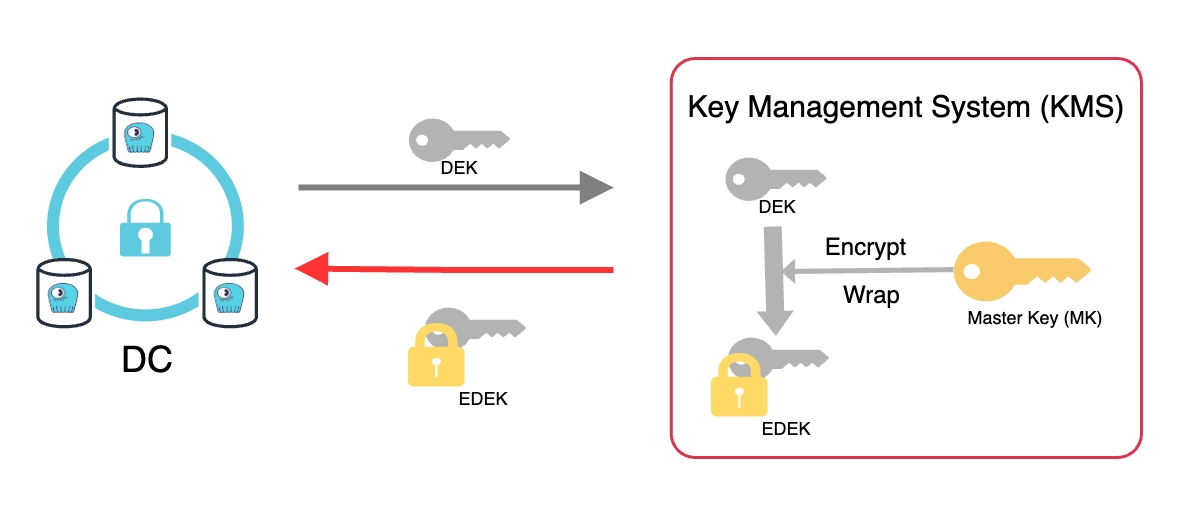
The first step of the encryption process is to encrypt every record with a data encryption key (DEK). Once the data is encrypted with the DEK, it is sent to either AWS KMS or GCP KMS, where the master key (MK) resides. The DEK is then encrypted with the master key (MK), producing an encrypted DEK (EDEK or a wrapped key).
The master key remains in the KMS, while the EDEK is returned and stored with the data. The DEK used to encrypt the data is destroyed to ensure data protection. A new DEK will be generated the next time new data needs to be encrypted.
Decryption
Because the original non-encrypted DEK is destroyed when the EDEK was produced, the data cannot be decrypted. The EDEK cannot be used to decrypt the data directly because the DEK key is encrypted. It has to be decrypted, and for that, the master key will be required again.
This can only be decrypted with the master key(MK) in the KMS.
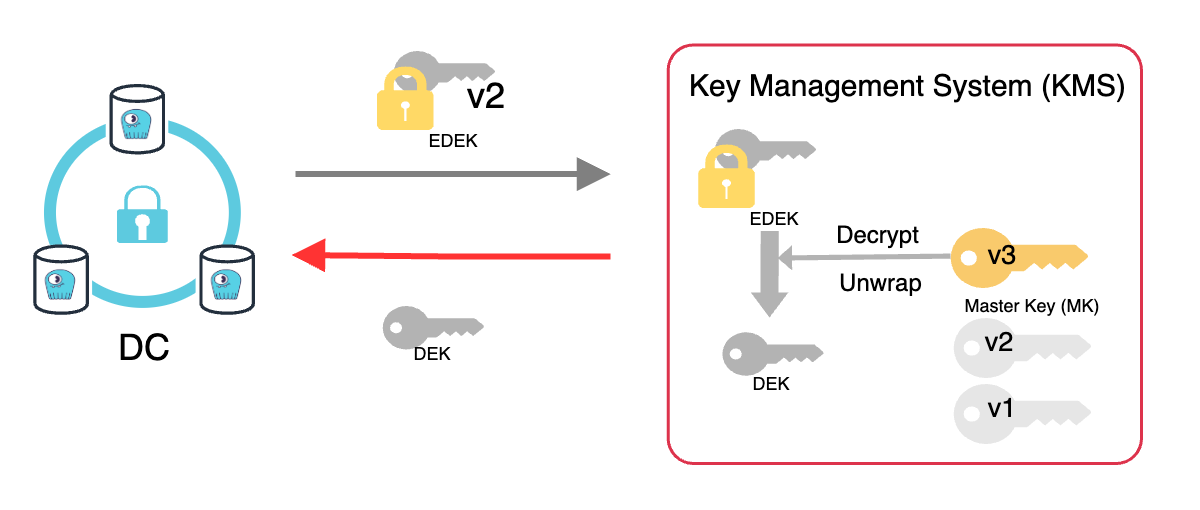
Once the DEK is unwrapped, the data can be decrypted.
As you can see, the data cannot be decrypted without the master key – which is protected at all times in the KMS and cannot be “copied” outside KMS.
By revoking the master key, the customer can disable access to the data independently from the database or application authorization.
Multi-region deployment
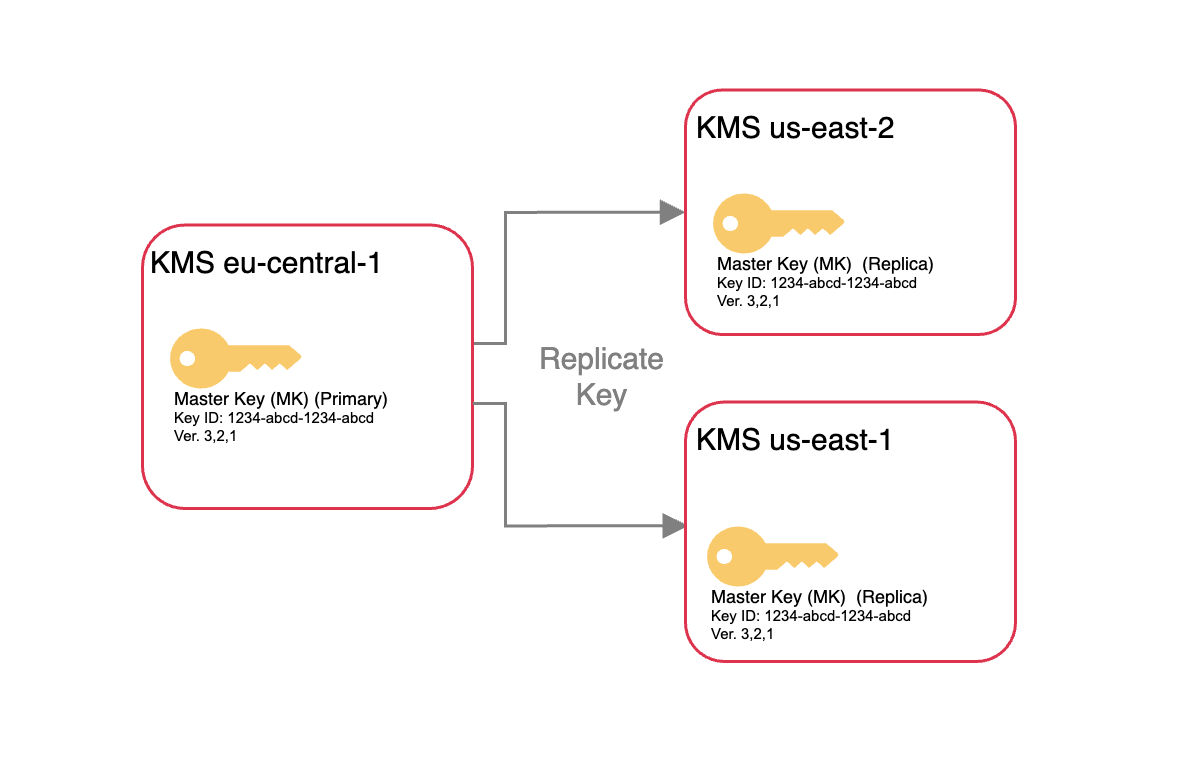
Adding new data centers to the ScyllaDB cluster will create additional local keys in those regions. All master keys support multi-regions, and a copy of each key resides locally in each region – ensuring those multi-regional setups are protected from regional outages for the cloud provider and against disaster.
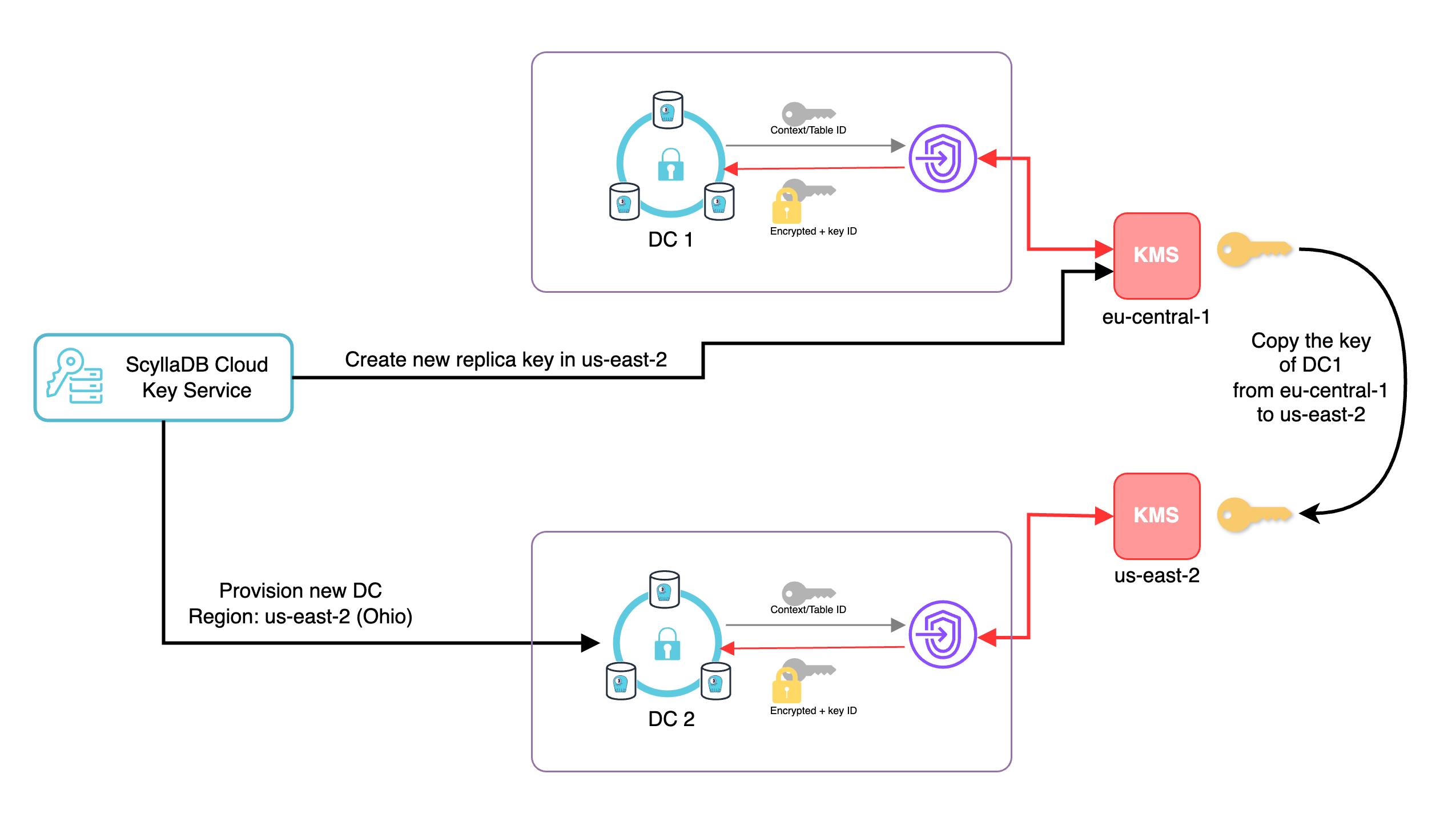
The keys are available in the same region as the data center and can be controlled independently.
In case you use a Customer Key – cloud providers will charge you for the KMS. AWS will charge $1/month, GCP will change you $0.06 for each cluster prorated per hour. Each additional DC creates a replica that is counted as an additional key.
There is an additional cost per key request. ScyllaDB Enterprise utilizes those requests efficiently, resulting in an estimated monthly cost of up to $1 for a 9-node cluster.
Managing encryption keys adds another layer of administrative work in addition to the extra cost. ScyllaDB Cloud offers database clusters that can be encrypted using keys managed by ScyllaDB support. They provide the same level of protection, but our support team helps you manage the master keys.
The ScyllaDB keys are applied by default and are subsidized by ScyllaDB.
Creating a Cluster with Database-Level Encryption
Creating a cluster with database-level encryption requires:
- A ScyllaDB Cloud account – If you don’t have one, you can create a ScyllaDB Cloud account here.
- 10 minutes with ScyllaDB Key or 20 minutes creating your own key
To create a cluster with database-level encryption enabled, we will need a master key. We can either create a customer-managed key using ScyllaDB Cloud UI or skip this step completely and use a ScyllaDB Managed Key, which will skip the next six steps.
In both cases, all the data will be protected by strong encryption at the database level.
Setting up the customer-managed key can be found in the database-level encryption documentation.
Transparent database-level encryption in ScyllaDB Cloud significantly boosts the security of your ScyllaDB clusters and backups.
Next Steps
- Start using this feature in ScyllaDB Cloud.
- Get your questions answered in our community forum and Slack channel.
- Or, use our contact form.