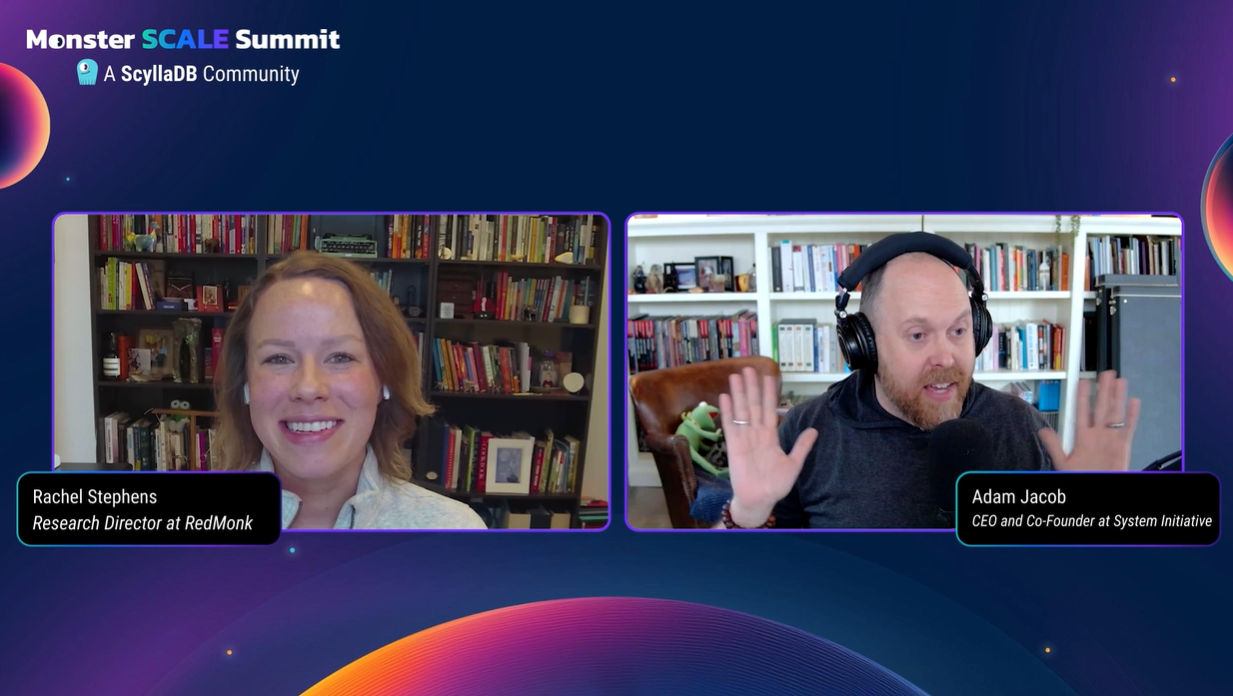



It seemed like just yesterday I was here in the US hosting P99 CONF…and then suddenly I’m back again for Monster SCALE Summit 2026.
The pace of it all says something – not so much about my travel between the US and Australia, but about how quickly this space is moving. Monster SCALE Summit delivered an overwhelming amount of content – so much that you need both time and distance to process it all. Sitting here now at Los Angeles International Airport, I can conclude this was the strongest summit to date.
Day 1
To start with, the keynotes. As expected, Dor Laor set the tone with a strong opening – making a clear case that elasticity is the defining capability behind ScyllaDB operating at scale. “Elastic” is one of those overloaded terms in cloud infrastructure, but the distinction here was sharp. The focus was on a database that continuously adapts under load without breaking performance.
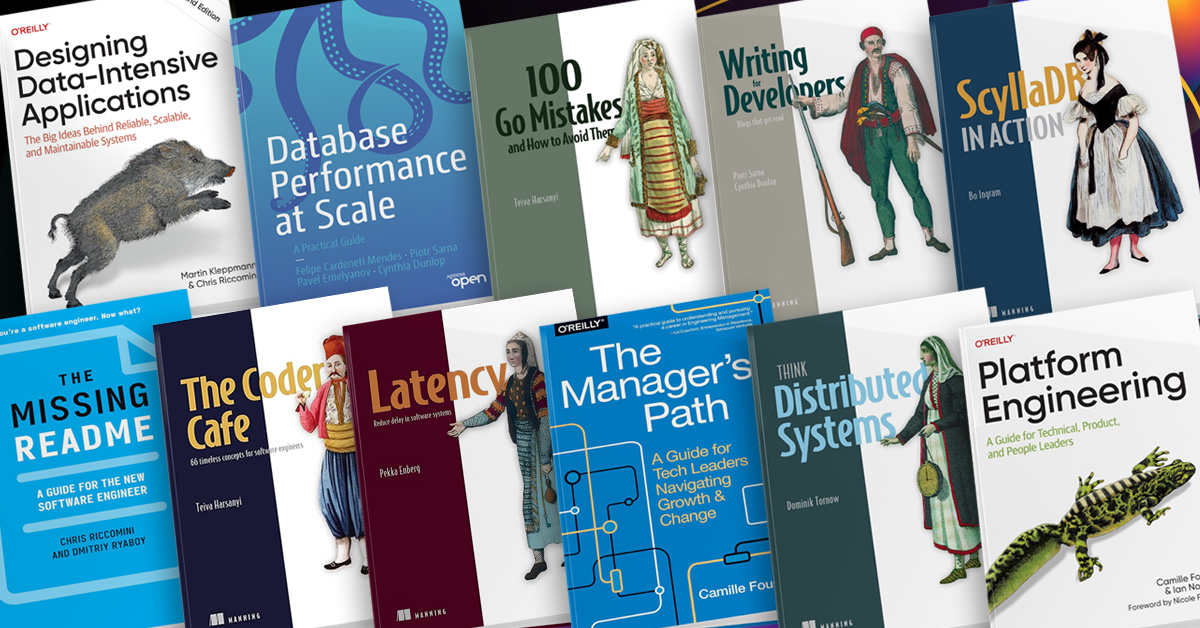
Hot on the heels of Dor was the team from Discord, showing us just how they operate at scale while automating everything from standing up new clusters to expanding them under load, all with ScyllaDB. What stood out wasn’t just the scale but also the level of automation. I mention it at every conference, but [Discord engineer] Bo Ingram’s ScyllaDB in Action book is required reading for anyone running databases at scale.
Since the conference was hosted by ScyllaDB, there was no shortage of deep dives into operating at scale. Felipe Cardeneti Mendes, author of Database Performance at Scale, expanded on the engineering behind ScyllaDB. Tablets play a key role as a core abstraction that links predictable performance with true elasticity. If you didn’t get a chance to participate in any of the live lounge events watching Felipe scale ScyllaDB to millions of operations per second, then you can try it yourself. The gap between demo and production is enticingly small, so it’s well worth a whirl.
From the customer side, Freshworks and ShareChat, both with their own grounded presentations about super low latency and super low costs, focused on what actually matters in production.
Enough of ScyllaDB for a bit, though. Let me recommend Joy Gao’s presentation from ClickHouse about cross-system database replication at petabyte scale. As you would expect, that’s a difficult problem to solve. Or if you want to know about ad reporting at scale, then check out the presentation from Pinterest.
The presentation of the day for me was Thea Aarrestad talking about nanosecond AI at the Large Hadron Collider. The metrics in this presentation were insane, with datasets far exceeding the size of the Netflix catalog being generated per second… all in the pursuit of capturing the rarest particle interactions in real time. It’s a useful reminder that at true extreme scale, you don’t store then analyze. Instead, you analyze inline, or you lose the data forever. A big thanks to Thea. We asked for monster scale, and you certainly delivered.
At the end of day one, we had another dense block of quality content from equally strong presenters. Long-time favourite, Ben Cane from American Express, is always entertaining and informative. We had some great research presented by Murat Demirbas from MongoDB around designing for distributed systems. And on the topic of distributed systems, Stephanie Wang showed us how to avoid some distributed traps with fast, simple analytics using DuckDB. Miguel Young de la Sota from Buf Technologies indulged us with speedrunning Super Mario 64 and its relationship to performance engineering. In parallel, Yaniv from ScyllaDB core engineering showed us what’s new and what’s next for our database.
Pat Helland and Daniel May finished Day 1 with a closing keynote on “Yours, Mine, and Ours,” which was all about set reconciliation in the distributed world. This is one of those topics that sounds niche, but sits at the core of correctness at scale. When systems diverge – and they always do – then reconciliation becomes the real problem, not replication. Pat is a legend in this space and his writing at https://pathelland.substack.com/ expands on many of these ideas.
Day 2
Day 2 got off to an early start with a pre-show lounge hosted by Tzach Livyatan and Attila Toth sharing tips for getting started with ScyllaDB. The opening keynote from Avi Kivity went deep into the mechanics behind ScyllaDB tablets, with the kind of under-the-hood engineering that makes extreme scale tractable rather than theoretical.
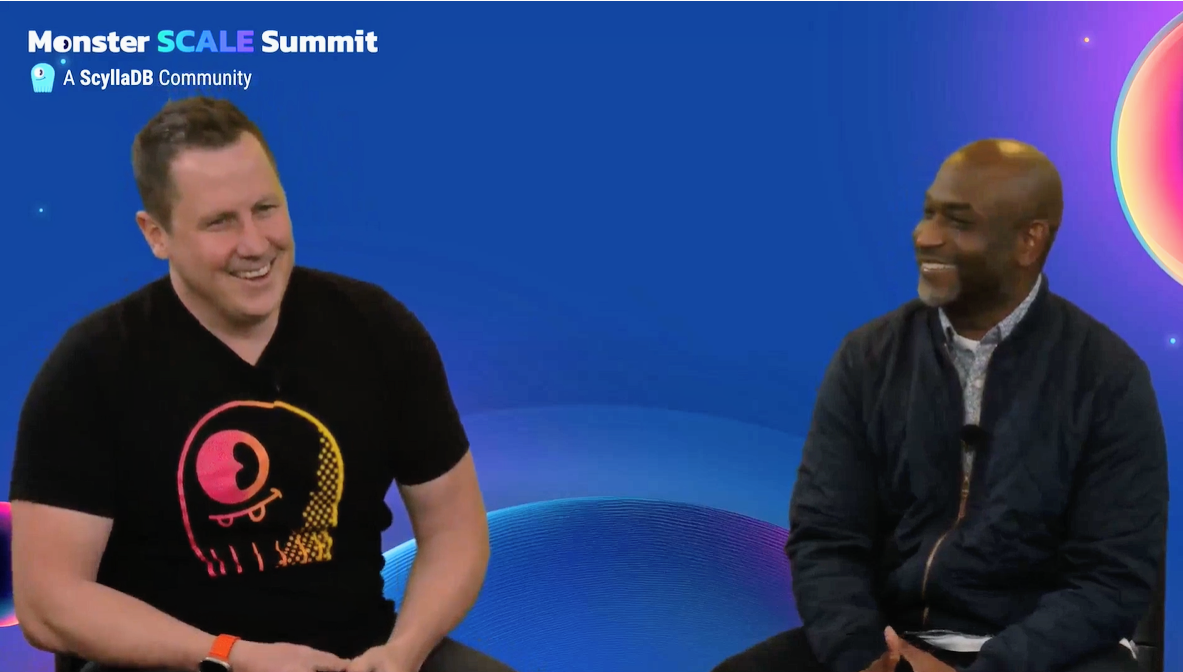
I then had the opportunity to host Camille Fournier, joining remotely for a session on engineering leadership and platform strategy under increasing system complexity. AI was a recurring theme, but the sharper takeaway was how platform teams need to evolve their role as abstraction layers become more dynamic and less predictable. Camille also stayed on for a live Q&A, engaging directly with the audience on both leadership and the practical realities of operating modern platforms at scale. Big thanks to Camille!
The next block shifted back into deep technical content, starting with Dominik Tornow from Resonate HQ, sharing a first-principles approach to agentic systems. Alex Dathskovsky followed with a forward-looking session on the future of data consistency in ScyllaDB, reframing consistency not as a static tradeoff but as something increasingly adaptive and workload-aware. Szymon Wasik went deep on ScyllaDB vector search internals with real-time performance at billion-vector scale. It was great to see how ScyllaDB avoids the typical latency cliffs seen in ANN systems.
From LinkedIn, Satya Lakshmikanth shared practical lessons from operating large-scale data systems in production, grounding the conversation in real-world constraints. Asias He showed us how incremental repair for ScyllaDB tablets is much more operationally feasible without the traditional overhead around consistency. We also heard from Tyler Denton, showcasing ScyllaDB vector search in action across two use cases (RAG with Hybrid Memory and anomaly detection at scale).
Before lunch, another top quality keynote from TigerBeetle’s Joran Dirk Greef who had plenty of quotable quotes in his talk, “You Can’t Scale When You’re Dead.” And crowd favorite Antirez from Redis gave us his take on HNSW indexes and all the tradeoffs that need to be considered.
The final block in an already monster-sized conference followed up with Teiva from Google, sharing lessons drawn from large-scale distributed systems like Gemini. MoEngage brought a practitioner view on operating high-throughput, user-facing systems where latency directly impacts engagement. Benny Halevy outlined the path to tiered storage on ScyllaDB. Rivian discussed real-world automotive data platforms and Brian Jones from SAS highlighted how they tackled tension between batch and realtime workload at scale by applying ScyllaDB. I also enjoyed the AWS talk from KT Tambe with Tzach Livyatan, tying cloud infrastructure back to database design decisions with the I8g family.
To wrap the conference, we heard from Brendan Cox on how Sprig simplified their database infrastructure and achieved predictable low latency with – I’m sure you’ve guessed by now – ScyllaDB.
Throughout the event, attendees could also binge-watch talks in Instant Access, which featured gems from Martin Kleppmann and Chris Ricommini, Disney, DBOS, Tiket, and more.
Prepare for Takeoff
Final call to board my monstrous 15-hour flight home…
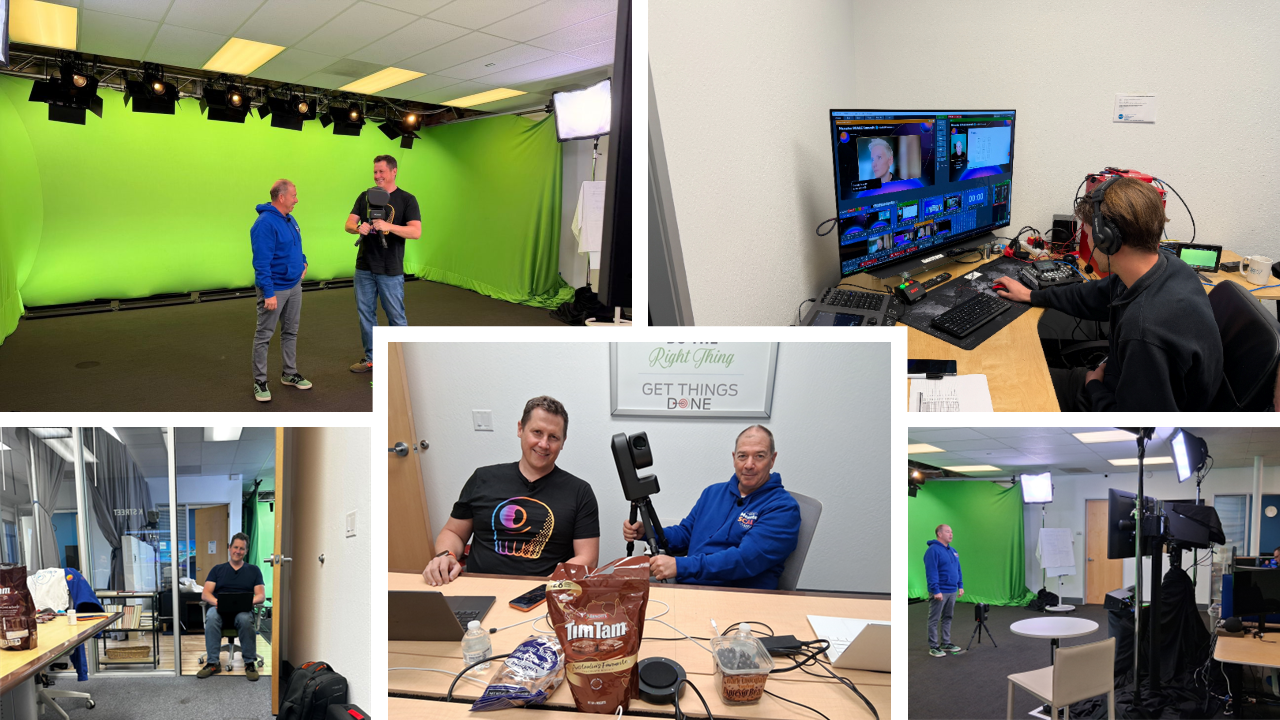
It’s a great privilege to host these virtual conferences live backed by the team at ScyllaDB. The quality of this event ultimately comes down to the people – both the presenters who bring great depth and detail and the audience that keeps the conversation engaged and interesting. Thanks to everyone who contributed to making this the best Monster SCALE Summit to date.
If you want to chat with our engineers about how ScyllaDB might work with your use case, book a technical strategy session.